

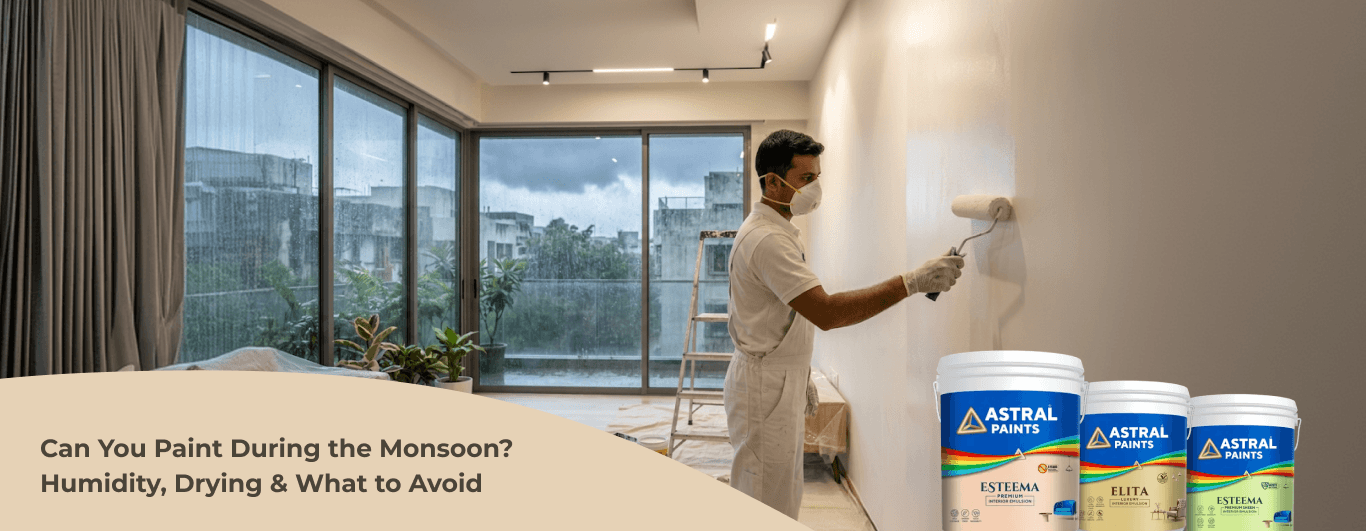
It is one of the most common questions we hear once the rains set in: can you actually paint during the monsoon? The honest answer is yes, with a few sensible precautions, and mostly for interiors. You can repaint the inside of your home on a dry day, as long as the walls are dry, the room is ventilated, and you give each coat extra time. Exteriors are a different story, and are usually better left until the weather settles. Here is the thing worth remembering: the rain itself is rarely what ruins a paint job. Trapped moisture and rushed drying are. This guide explains what humidity does to paint, how to paint safely through the season, and when it is better to wait.
Key takeaways
- Yes, you can paint in the monsoon, especially interiors, if the wall is dry and the room is ventilated.
- Exterior painting is best avoided during active rain. Waterproof before the season instead.
- High humidity slows drying, so allow noticeably more time between coats than usual.
- Most monsoon paint failures come from painting over damp walls or skipping prep, not from the rain itself.
- Pick a dry spell, prep well, prime, and never paint a wall that is still wet.
Can you really paint during the monsoon?
For interiors, yes. If you choose a day without active rain, make sure the wall is properly dry, and keep the room ventilated, a monsoon repaint can turn out beautifully. Exteriors are harder. Rain and high humidity stop paint bonding and drying the way it should, so outdoor work is better saved for a drier stretch. The smarter monsoon move outdoors is to waterproof your walls before the season, so they are ready for the rain rather than fighting it.

Interiors are usually fine with care. Exteriors are better left until the weather settles.
What does humidity do to paint?
Humidity is the real character in this story. During the southwest monsoon, which brings most of India’s yearly rain between June and September, the moisture in the air climbs steeply, and that changes how paint behaves.
- Drying slows right down. Paint dries as its water evaporates. When the air is already full of moisture, evaporation stalls, so each coat stays wet far longer and needs more time before the next one.
- Damp walls break the bond. Moisture in the wall, from seepage or the humid air, stops paint gripping and can lead to bubbling, peeling and even fungal growth.
- Finish problems creep in. Slow drying leaves the film soft for longer, so it can pick up dust, show lap marks, or streak if a light shower or overnight dew catches it.
- Poor airflow makes it worse. With windows shut against the rain, rooms stay damp, fumes linger, and surfaces take even longer to dry.
How to paint during the monsoon, the right way
Work with the weather rather than against it, and a monsoon repaint holds up just fine.
- Wait for a dry spell. Check the forecast and pick a stretch of lower humidity with no rain due. For exteriors, give the wall 24 to 48 hours to dry after the last shower.
- Make sure the wall is dry. The surface should be dry underneath, not merely dry to the touch. If a wall has had seepage, treat the damp with a product like Astral Damp Safe and let it dry before you start.
- Prep and prime. Clean the surface, fix cracks and old damp spots, and apply a good primer. A sealed, sound surface is what stands up to the humidity.
- Use interior emulsions and allow extra time. Indoors, a washable emulsion such as Astral Elita, Esteema or Styla works well. Give each coat noticeably longer to dry than you would in summer.
- Keep the air moving. Open what windows you can between showers, and use a fan to help coats dry and to clear fumes.
- Do not paint before rain. Outdoors especially, never start a coat if a shower is likely within its drying window. Even a brief drizzle can leave watermarks.
When should you not paint?
Some conditions are simply not worth fighting. Hold off when:
- the wall is damp, wet or showing active seepage;
- heavy rain is forecast within the drying window, especially for exteriors;
- there is visible mould or salt on the wall that has not been treated yet;
- the room cannot be ventilated at all.
In each of these cases, sorting the problem first, whether that is damp, mould or ventilation, saves you from repainting the same wall twice.
Frequently asked questions
Can I paint the interior of my house during the monsoon?
Yes. Interior painting works well in the rains as long as you pick a dry day, make sure the walls are fully dry, keep the room ventilated, and allow extra drying time between coats.
Why does paint take so long to dry in the monsoon?
Paint dries as its water evaporates into the air. When the air is already humid, that evaporation slows down, so each coat stays wet much longer. This is why you need more time between coats during the rains.
Can I paint exterior walls in the rainy season?
It is best avoided during active rain, because damp walls and humidity stop the paint bonding and curing. The better approach is to waterproof exteriors before the monsoon, and to paint only when the surface is fully dry, with no showers due.
How long should I wait to paint after it rains?
Give an exterior wall around 24 to 48 hours to dry after rainfall, and longer for shaded or damp-prone spots. The surface should be dry underneath, not merely dry to the touch.
What happens if I paint over a damp wall?
The trapped moisture pushes back through the paint, which leads to bubbling, peeling and often mould. Always let a wall dry fully, and treat any damp at its source, before you paint.
| Planning a monsoon repaint? Astral’s interior emulsions, primers and Damp Safe waterproofing help you paint well through the rains and keep damp out. Explore the range, find your nearest Astral Paints dealer, or call our helpline on 1800 309 9393. |