

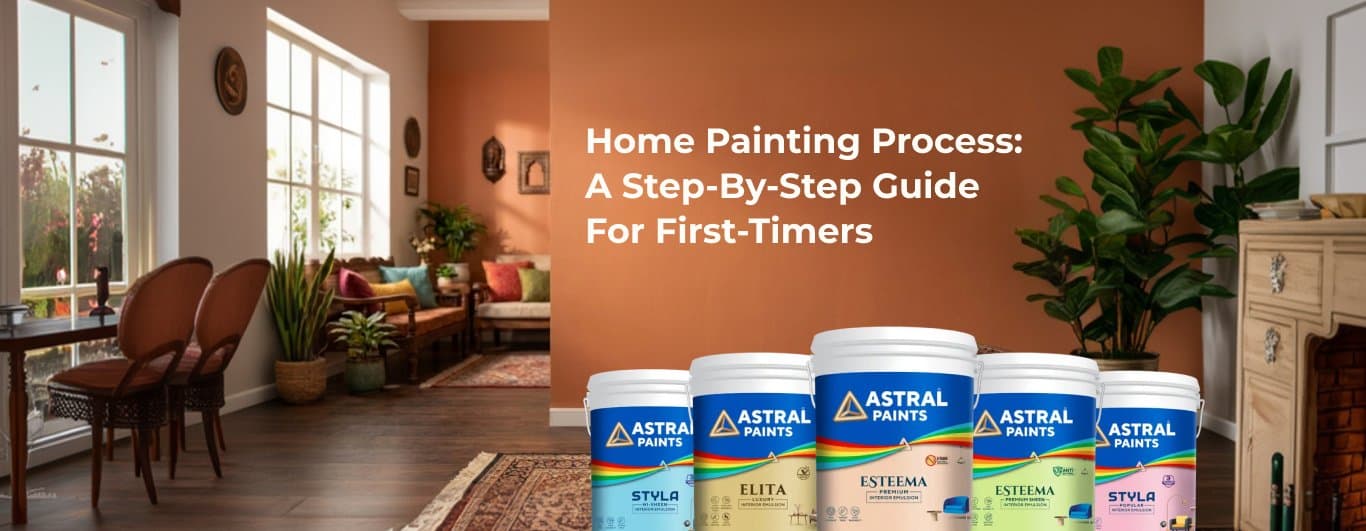
Home Painting Process: A Step-by-Step Guide for First-Timers
If you are planning your first home painting project, the process can feel like a bit of a black box — what actually happens between a bare wall and a beautifully finished one? The good news is that a good job follows the same clear sequence every time, whatever paint you choose. Once you know the steps, it becomes easy to plan the work, to do it well, and to tell whether a painter is cutting corners.
Below we walk through that sequence step by step, then run through the products you need at each stage and how to spot a finish that will last. It is written for the homeowner taking this on for the first time, with notes along the way for contractors and project teams.
The home painting process, step by step
Whether a painter is doing the work or you are rolling up your sleeves, every home painting job follows the same sequence. Skipping the early steps is the most common reason a finish disappoints.

- Inspect and plan. Measure the area, check whether the wall is new or being repainted, and look for cracks, damp patches or flaking.
- Repair and clean. Fill cracks, scrape off loose old paint, and wipe the surface free of dust and grease so everything that follows can bond.
- Apply putty. One or two coats of wall putty level the surface and hide undulations. Let each coat dry, then sand it smooth.
- Prime. A coat of primer seals the putty and gives the paint something to grip, which improves coverage and makes the finish last longer.
- Apply the topcoats. Two coats of emulsion are standard; deep or dark shades sometimes need a third. Allow the recommended recoat time between coats.
- Cure and clean up. Let the finish cure before you wash it or move heavy furniture back. Clean water-based tools simply with water.
The thread running through all six steps is patience between coats. Putty, primer and each coat of emulsion need time to dry before the next layer goes on — rushing it is what causes peeling, patchiness and a finish that never quite settles. Follow the recoat times on the tin and the result repays the wait. Exterior walls ask for a little extra care here, since sun and humidity affect how each coat dries.
What you’ll need at each stage
A lasting finish is a system, not a single tin — each layer has a job to do. Here is how our range lines up against the steps above.
| Stage | From the Astral range | What it does |
| Surface repair | Smooth & Acrylic Wall Putty | Levels and smooths the wall so the topcoat sits evenly |
| Priming | Interior & Exterior Primers, Dual Primer | Seals the surface and improves adhesion and coverage |
| Topcoat — interior | Elita, Esteema, Styla | The colour and finish for indoor walls, across tiers |
| Topcoat — exterior | Extura Plus, Raga | Weather, UV and algae protection for outside walls |
| Tools | Rollers, brushes & ancillaries | Even application and clean edges |
How to tell the job’s been done right
A good home painting job announces itself. Looking across the wall in daylight, you should see no roller marks, lap lines, thin patches or visible joins — just an even, uniform colour from one corner to the next. Edges along skirting, switchboards and the ceiling line should be crisp rather than ragged. The surface should feel smooth to the touch, and the paint should be fully dry and free of smell before furniture moves back. On site, these same checks make a quick, practical sign-off before a unit is handed over.
Tips for a finish that lasts
- Never rush the prep. Clean, dry, well-repaired walls are the single biggest factor in how good and how long-lasting the finish turns out.
- Always putty and prime where needed. These hidden layers decide whether the topcoat sits smooth and stays put.
- Match the paint to the wear. Put your most washable, durable finish on high-traffic rooms and exposed exteriors; quieter walls can take a simpler one. Choosing the best paint for walls that take the most wear means fewer repaints down the line.
- Mind the weather. Avoid painting in heavy humidity or harsh direct sun, especially outdoors, so each coat dries and cures properly.
For project teams, standardising on one interior and one exterior product across units keeps the finish consistent, simplifies procurement, and makes coverage and recoat planning straightforward.
Frequently asked questions
How long does it take to paint a house?
A 2BHK repaint usually takes around 3–5 days. A fresh job with full putty and primer takes longer, because each layer needs time to dry before the next one goes on.
How many coats of paint do walls need?
Two coats of emulsion over primer is the standard for an even finish. Deep or dark shades, and patchy old walls, can need a third.
Do I really need both putty and primer?
On fresh or uneven walls, yes. Putty levels the surface and primer seals it — together they are the difference between a finish that lasts years and one that flakes early. A sound repaint can sometimes skip putty.
What’s the difference between fresh painting and a repaint?
Fresh painting starts from bare or new plaster, so it needs the full sequence — putty, primer and two coats. A repaint on sound walls needs less prep: cleaning, a primer touch-up where needed, and fresh coats.
When can I wash the walls or move furniture back?
The paint is touch-dry within a few hours, but it takes a couple of weeks to reach full hardness. Move furniture back gently once it is dry, and hold off on scrubbing the walls until the finish has fully cured.
The trust of Astral, now in paints
Astral Paints is part of Astral Limited — the same group behind Astral Pipes, Adhesives, Bathware and construction chemicals. The build-quality habit that goes into our pipes now goes into every tin, backed by a 1,400-plus shade palette, a growing dealer network and on-ground technical support to help you plan a job properly.
| Planning a paint job? Explore 1,400+ shades, find your nearest dealer for expert advice, or call our helpline on 1800 309 9393. Building professionals can also partner with us — ask about becoming an Astral Paints dealer. |