

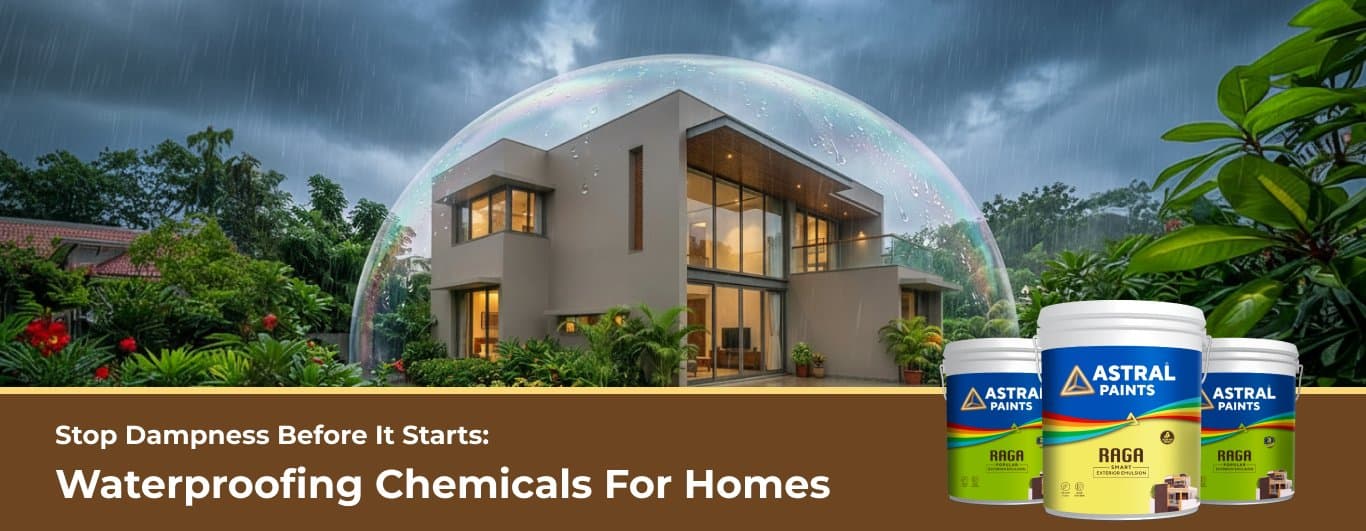
Stop Dampness Before It Starts: Waterproofing Chemicals for Homes
Every monsoon, the same problem creeps back into countless Indian walls: damp patches, peeling paint, blistering and that tell-tale musty smell. Waterproofing chemicals are how you stop it before it starts. These are specialised coatings and treatments — for roofs, exterior walls, bathrooms and other damp-prone surfaces — that block water from getting into the structure in the first place. Left unchecked, dampness does more than spoil paint: it feeds mould and mildew that aggravate allergies and breathing, and it slowly eats into plaster, weakens structure and rots the wood and steel inside.
In this guide we explain where dampness comes from, why painting over it never works, the waterproofing products in our range, and how the job is done. It is written for homeowners protecting their home, with notes for the builders and project teams who specify waterproofing on site.
Where dampness comes from
Dampness is rarely random — it almost always traces back to one of a few sources, and working out which one you are dealing with is the first real step to fixing it.

- Terrace and roof leakage. Rainwater pools and finds the cracked joints in parapets and slabs, then leaks down into ceilings and the walls below.
- Penetrating damp through exterior walls. Driving rain soaks into porous outer walls and slowly works its way inward.
- Rising damp from the ground. Ground moisture wicks up through the foundation and into the lower walls.
- Bathroom and plumbing seepage. Leaks behind tiles and around pipes spread into the surrounding walls.
In an older or poorly maintained home, more than one of these is often at work at once — which is exactly why you pin down the real cause before reaching for a product.
Why painting over damp never works
It is tempting to roll a fresh coat over a damp patch and forget about it. It will not last. Ordinary paint is made to beautify, not to hold back water, so the moisture simply pushes through again — lifting the new paint, leaving chalky white salt deposits and feeding black and green mould. Behind the scenes, the same water keeps eating into plaster and structure. The only real fix is to stop the water at its source with the right waterproofing product, let the wall dry, and only then repaint.
Watch for the early signs: damp or wet-looking patches, blistering or peeling paint, white powdery deposits in corners and on sills, a musty smell, and black or green mould. Any of these calls for a waterproofing product — not just another coat of paint.
Why waterproofing is worth it
Waterproofing is easy to put off, but the case for doing it is strong. Left unchecked, damp does three kinds of damage. It weakens the building, as moisture eats into plaster, rusts the steel inside concrete and rots any woodwork it reaches. It harms health, because persistent damp feeds mould and mildew whose spores aggravate allergies and breathing problems. And it spoils your paintwork, blistering and staining even a premium finish from behind. A sound waterproofing layer protects all three at once — the structure, the people inside, and the look of your walls, season after season.
Our waterproofing range
Different problems call for different solutions, and the right choice among our waterproofing chemicals depends on where the water is getting in. Here is how the range maps to the most common cases.
| Product | Where it’s used | What it does |
|---|---|---|
| Damp Safe / Damp Safe Plus | Exterior walls & surfaces | Forms a protective barrier against rain and seepage on outside walls |
| Dry Wall (interior) | Interior damp-prone walls | Tackles dampness and efflorescence indoors, preparing the wall before painting |
| Waterproof Wall Putty | Damp-prone & exterior walls | A moisture-resistant base that helps keep damp from creeping into the paint |
| Crack Fill Paste | Cracks, joints & gaps | Seals the cracks and openings where water finds its way in |
How to waterproof, step by step
Waterproofing follows a logical order. The golden rule is to treat the cause, not just the symptom.
- Find the source. Trace where the water is getting in — terrace, exterior wall, bathroom or ground — before you treat anything.
- Clean and prepare. Remove flaking paint, dust, grease, mould and any white salt deposits; the surface must be sound and, where possible, dry.
- Fill cracks and gaps. Seal cracks, joints and pinholes so water has no easy path in.
- Apply the waterproofing coat. Use the right product for the surface in the recommended number of coats, letting each one dry as directed.
- Let it cure, then finish. Allow proper curing, then prime and paint with a weather-resistant exterior emulsion.
A word of judgement: minor surface dampness can be handled with the right coatings, but an active leak or structural water ingress needs a proper diagnosis — on those, bring in a professional rather than papering over the problem.
Frequently asked questions
Can I waterproof during the monsoon?
It is best done before the rains, on a dry surface. During the monsoon you can carry out emergency repairs, but lasting waterproofing needs the surface dry enough for the product to bond properly.
Does waterproof paint stop leaks on its own?
It helps with minor dampness and seepage, but it is a surface coating, not a cure for an active leak or structural water ingress — those need the source treated first.
What causes the white powder on my walls?
That is efflorescence — salts left behind as water moves through the wall and evaporates. It is a sign of dampness that needs treating, not just wiping away.
Should I waterproof the inside or the outside?
Ideally the outside, where water enters — stopping it at the source is the most effective approach. Interior treatments help where exterior access is limited or where damp is already showing indoors.
When is the best time to waterproof a home?
In the dry season, ahead of the monsoon, so coatings cure fully and your walls are protected before the rain arrives.
The trust of Astral, now in paints
At Astral Paints, our waterproofing range draws on the water-management know-how of Astral Limited — a group whose pipes and construction chemicals have protected Indian buildings for years. Our crack fillers, moisture-resistant putties and coatings are built to work hand in hand with our primers and emulsions, for a wall that stays dry and looks good season after season.
| Fighting dampness? Explore our waterproofing range, find your nearest dealer for advice, or call our helpline on 1800 309 9393. Building professionals can also partner with us — ask about becoming an Astral Paints dealer. |